Employee Engagement – Essentials

“A productive employee who is kept busy working at his or her job is far more likely to be happy at that job and less likely to look for employment elsewhere.”

Zig Ziglar

Working with corporates for a couple of decades has taught me some valuable lessons.  One observation is that corporate culture, and leadership influences a person’s behaviour.  Most people react differently in a similar situation in different organizations.  It is almost as if they possess different set of values, attitude, and attributes in diverse environments.  Even the leaders, responsible for setting trends, show variations in their dealings, depending upon their place of work.  The thought leadership and the corporate honchos are aware of this fact, yet do little to change the attitudes.  More often, a set attitude is woven into a corporate’s fabric and a change of mindset would require changing the entire workforce.  This is impractical and open to many risks.  Hence, most companies continue to work with the foundation laid at the outset.  These set values, different from the mission and vision statements of the organization, decide the type of employees it would attract.  Mission and vision statements, mostly (and I am being a cynic here), are like elephant tusks, good advertising tool.  Like tusks, they have their use, but not for the owner.

A proper process for employee engagement of new hires stems from the aforementioned organizational attitudes.  A company, which has a set of veterans to boast of, will be less welcoming to fresh ideas, working attitudes, and new processes.  An organization, which has been functioning without set processes, can be a difficult place of work for a new employee.

So, why is employee engagement important?  What are the implications of a non-engaged workforce?  Most reasons are obvious and I am only restating them.  My personal experience says that less engagement means more attrition, with employees leaving for greener pastures.  An engaged employee is expected to be more satisfied.  There could be other factors governing attrition.  However, work satisfaction may not be the major influencer.  An engaged employee, with presumed high levels of job satisfaction, will have positive effect on productivity.  Hiring is a tedious process and return on investment (ROI) may get a negative report if hiring process, training time, probation time, loss of resource to attrition, and the re-hiring of a new resource is calculated as a liability.  The resultant productivity may not even be registered before the cost to the company due to the loss of a non-engaged employee tilts the financial balance.  I am also aware of certain organizations, which find it difficult to hire good talent due to negative word-of-mouth publicity as an employer.

I will sum it up with one statement from the wiki that seemed apt. “An organization with ‘high’ employee engagement might therefore be expected to outperform those with ‘low’ employee engagement, all else being equal.”

||Sarvam Sri Krishna Arpanamastu||

Posted in In my Opinion, Technical | Tagged , , , , , , | 3 Comments

Flyer, Pamphlet, Brochure, Whitepaper, Case Study, and Presentation

Introduction

A business is as much dependent on its sales and marketing as it is dependent on product, delivery, and services.  Sales team is supported by sales support teams like, inside sales, PreSales, and marketing and communications.  Services, delivery, and implementation contribute to the image of a product or an organization, essentially through word-of-mouth.  Additionally, pitching a product or service in the marketplace is as important as dressing up a bride for the wedding.

Marketing and Communications, or MarkComm, plays a vital role in placing a product or a service in the marketplace.  Sales, and sales support, like inside sales and PreSales, are also dependent on the marketing team.  MarkComm may receive various requests to create flyers, brochures, to spruce up presentations, and to create press releases.  MarkComm, in turn, is dependent on the delivery team or the production floor to provide the write-ups and other material information for the mentioned requests.  At times, sales and sales support may demand custom-made material for their pitches, presentations, and/or campaigns.  However, there could be a mismatch between expectations and reality.  The intent and the need may not be as clearly articulated or understood, and the sales team may experience a resistance from the MarkComm in deviating from the standards of a marketing tool.  A brochure and a presentation will serve different purposes, whereas, a four-in-one marketing tool would be the BDMs’ expectation.  A quick review of some marketing tools is presented below.  Please note that the mentioned standards apply to both, printed and digital marketing tools.

Flyer

Also called a leaflet or a handbill, the standard size of a flyer is 8.5 inches by 11 inches or A4 size.  This single page tool is handed out or hung at public locations.  A flyer is typically used for event announcements, promoting a new product, a service, or opening of a new place, campaigning, local advertisements, and/or factsheets at a conference or shows.  A flyer is also distributed with the newspapers or magazines as an insert.  The intent is to grab prospective client or customer’s attention.  Flyers act as teasers and get the people interested in your product or service.  When creating a flyer, the focus should be on the headline to attract the reader and elicit interest.  A coloured flyer with a better design and quality is called a leaflet.

Pamphlet

A pamphlet is a multi-sheet booklet with pages stapled or stitched together.  A pamphlet will not be hardbound.  It can be a single sheet printed on both sides or multipage or multi-sheet.  Pamphlets can be either a bunch of flyers, or brochures depending upon your marketing requirements.  A pamphlet may be used for providing a product or service catalogue, reference material, or manuals.

Brochure

A brochure is different from a flyer where, a single sheet of paper is folded two times (bi-fold) to create four panels or three times (tri-fold) to create six sections.  The information is printed on both sides of a better quality paper, with graphics added to it.  Brochures are printed in colour.  Unlike flyers, brochures are not disposed of after one read and are kept for future reference, as they contain vital information about the organization.  Each section of the brochure should present a specific information and describe it briefly.  Include some graphics, vital information about your organization listing the key differentiators, awards and recognitions, if any, clientele, if approved, testimonials, and most important, company USP.  Brochures should be used only when a prospect shows interest in your services or product and wants more information before making up their mind.  Sell the benefits of your product or service to the customer instead of jamming them with the information about your company.  A customer may not be as interested in your achievements and will be looking to know how you can serve their interest with your products or services.

For getting a client interested, the first reference material shared should be flyers and not brochures.

Some of the types of folds in brochures are illustrated below:

Brochure

White Paper

A white paper is a complete report on a subject or a problem statement, with statistics, that helps to educate the reader about the topic, its merits and demerits, and its impact on the reader and/or their organization.  A white paper should be used to educate the reader and not to promote your organization.  A white paper can also reflect an organization’s philosophy or position on a challenge, product, or service and may discuss the types of solution.  A white paper should have the following headers: introduction, problem statement, background (advertise your skills to solve the problem), solution, and conclusion.  It is a great marketing tool and adds value to your prospecting when shared with the client who needs educating.  White papers play a very important role in digital marketing and are a crucial part of an effective organizational website.

Case Study

Case studies are stories of the work done by an organization.  Case studies present the documented proof of handling a problem for a client.  It highlights the expertise used in resolving a situation through custom solution.  A case study is different from a white paper as it only covers the problem presented, solution provided, and benefits measured.  A white paper may not be as contextual and may talk about the philosophy or the perceived solution.  However, a case study would present the real-time scenarios of a situation handled.  Primarily, the case study will have the project name, client detail, business need, solution, highlights, benefits, screen grabs, and client testimonials.  Case studies can be shared with the client independently, added to a proposal, or inserted in the presentations for prospecting.

Presentation

In sales and marketing, a presentation is the backbone of any prospecting.  A business development manager (BDM) depends on a good presentation or a slide deck to sell its organizational services and product.  A presentation ideally begins by introducing the organization, followed by services offered, verticals serviced, key differentiators, clientele, awards and recognitions, and then drills down to specifics on various products and services, including the models adopted, solutions applied, and case studies.  A presentation should follow all the rules of creation and should not end up becoming a thesis.  A presentation should always remain an aid, limiting the information to key points.  A presentation speaks volumes if represented graphically.

Tips for Good Writing

Decide the topic of importance: In corporate scenario, a repository will have some pre-designed topics and their collaterals.  However, many papers will be written as per the requirements received from various prospects.

Write succinctly: It is not an exam paper where marking may be dependent on the number of sheets filled.  Redundancies are, at times, important.  However, do not overkill.  It appears good to present same set of information differently, and under different heads, giving the impression of addressing each point in client’s RFP.  Nonetheless, client can identify repetitions.  Use brevity to prevent your writing from looking unprofessional.

Executive summary: Introduction or executive summary can set the ball rolling.  Use this first section cleverly to make a point.

Emphasize your USP: Instead of beating around the bush, be upfront and present your strengths.

Be honest: Do not try to fib.  Use real data.  Mention your capabilities and own up your lack of experience.  Show your skills, and mention the lack of opportunity for using those skills.  Use the forum/writing space to inform how you can make a difference, if given a chance.

Write in a flow: Write the entire paper at a go so as not to lose the flow, connect, effective transitions, and important thought process.

Proofread: Read, re-read, and then re-re-read whatever you write for professional consumption.  Avoid Indian-ness by translating your vernacular idioms or language into English.  Use the appropriate idioms and phrases as per the language.  Edit your paper carefully and stick to all grammar standards.  Your writing should never be informal, and if you are a writer, your SMS will be formal too.J

Use in-built proofreading tool: MS Word has a great tool for proofreading your document.  It can identify spelling errors, subject-verb disagreements, and much more.  Turn the features on and use them optimally.

Use graphics: Charts, graphics, tables, and figures are more effective and help break the monotony of a paper.  Use graphics smartly.

Conclusion

It makes sense to be as professional in your presentations as you would be in the delivery of your services.  If we are in a business of writing, like content development and eLearning, let us exude the same in our initial collaterals that are shared with the client.  Use expert help for creating graphics and sprucing our presenting material.  Do not clutter each communication with the same amount of information.  Each document shared should add to the information and pique client’s interest to ask for more.  Make each communication tool look absolutely crisp and professional.  If the prospect shows no interest after the first campaign, it may not be because of too little information, but for lack of need.  An interested candidate can be scared off by too much information, and an uninterested client cannot be won with information overload.  Choose your communication tool wisely when prospecting.

||Sarvam Sri Krishna Arpanamastu||

Posted in Technical | Tagged , , , , , , , , , , | 1 Comment

A Trip to the Mughal Gardens

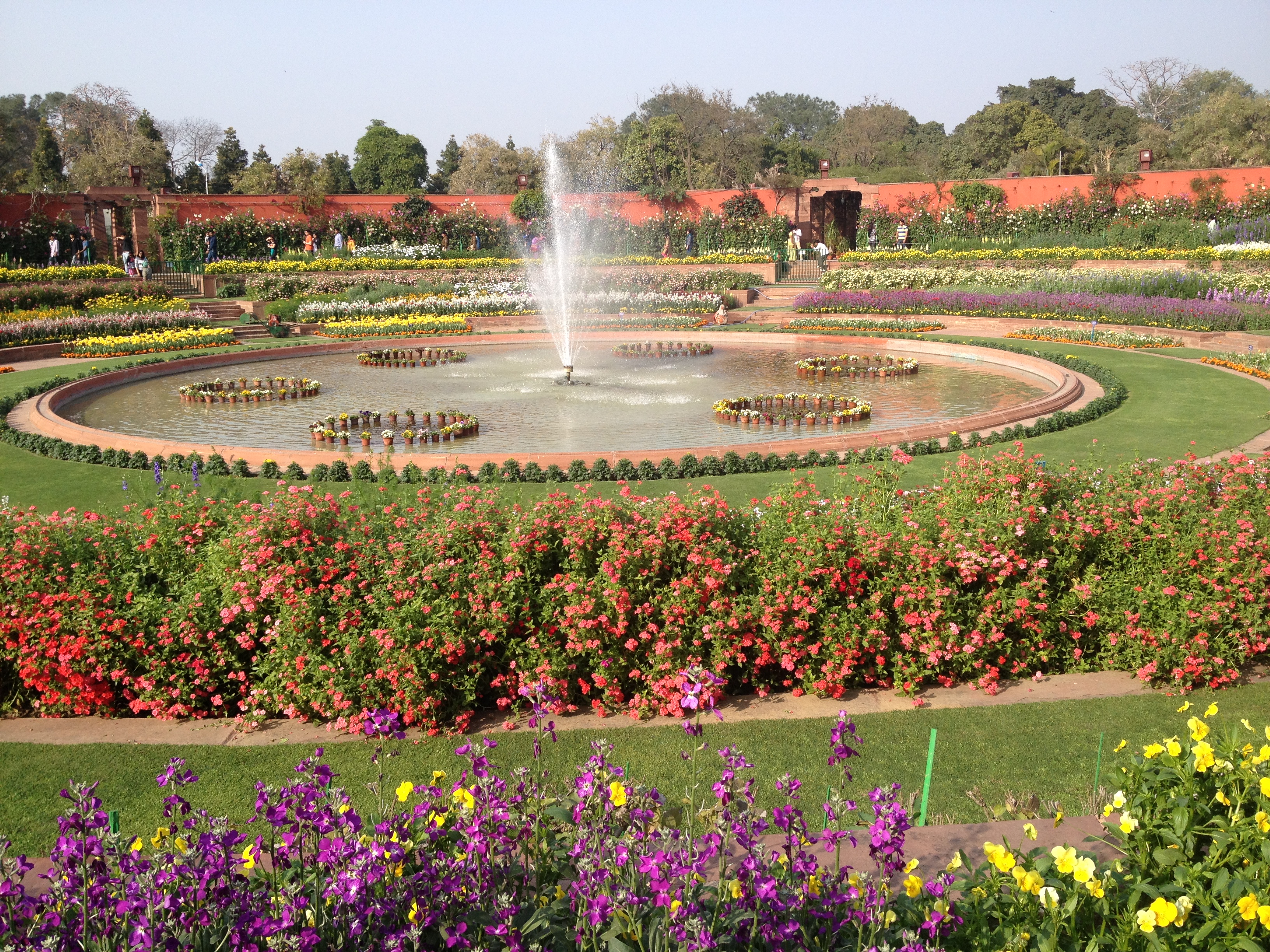
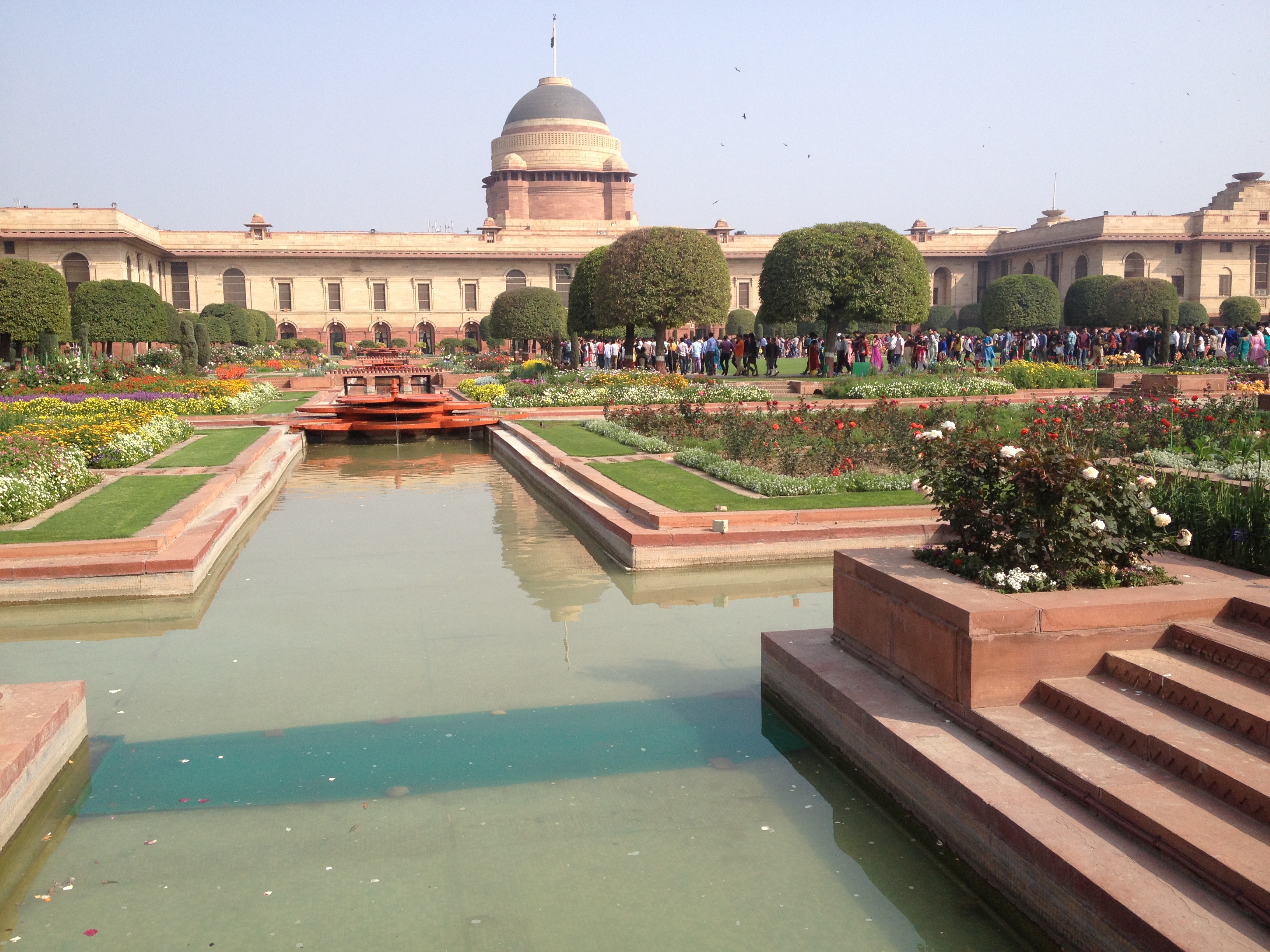
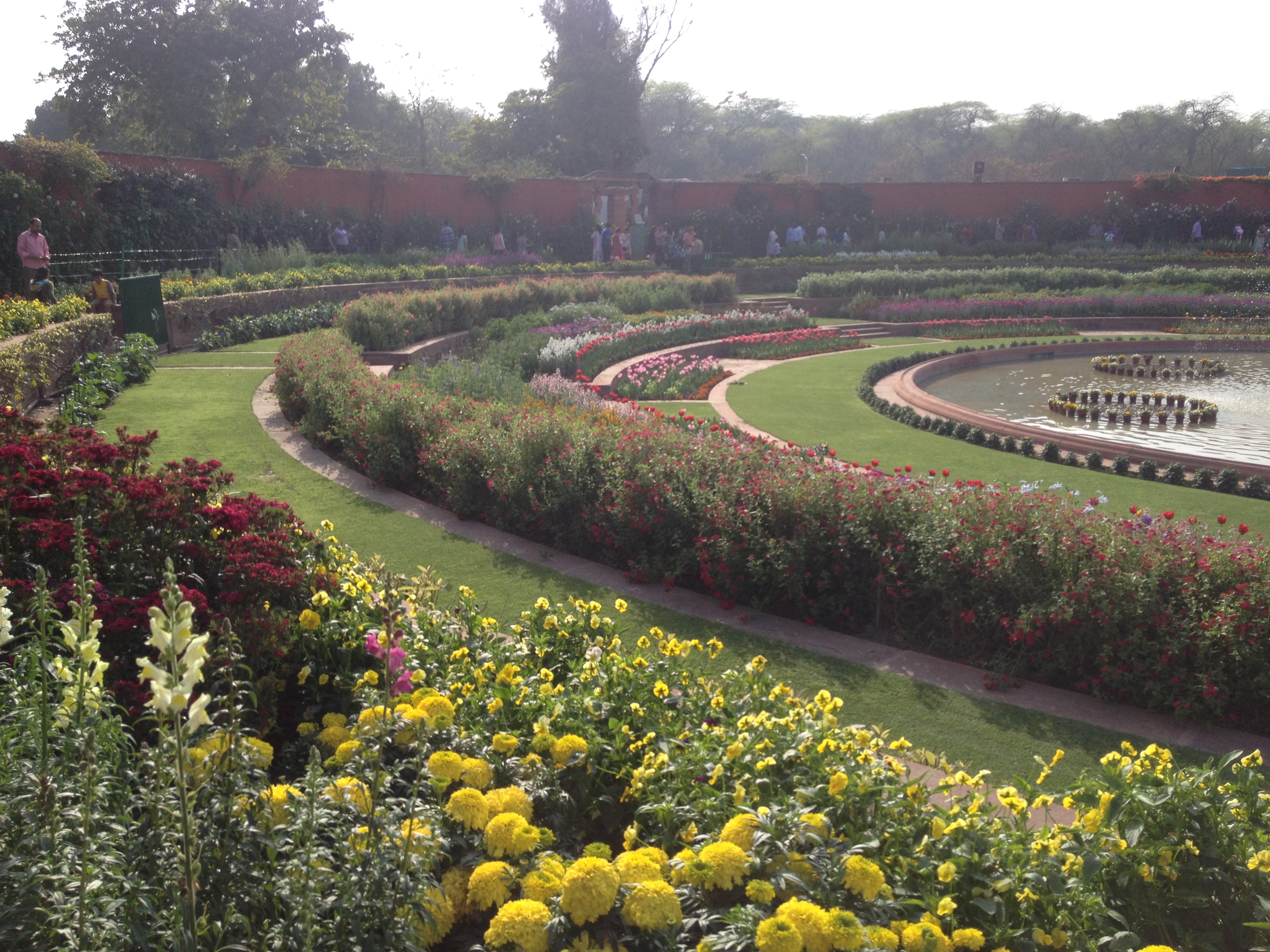
IMG_7965 IMG_8080IMG_7905  Mughal Gardens

Mughal gardens are a great legacy of Lutyens Delhi and a pride of the Rashtrapati Bhavan (President’s house) and New Delhi.  During spring each year, public gets a chance to visit these beautiful gardens.  I wonder when this tradition began.  Thanks to President Pranab Mukherjee, the arrangements are fabulous.  We went with lot of questions like will there be a fee, will there be adequate arrangements to keep our handbags, and will we be allowed to carry our mobiles.

The entry is well managed.  We jumped with joy to know that we can carry our mobiles and wallets with us.  As soon as you pass the first post, there are arrangements for drinking water. It was a sunny day yesterday, and we were parched, so we had our fill.  The walk inside is without hurdles. There were many visitors.  The best part is the freedom to click as many pictures as we want.  However, with freedom comes no responsibility for Indians, especially for our own property in our own land.  There were enthusiastic parents urging there young daughters to jump onto grass and get closer to the flowers for a better shot.  The job of the guards is unenviable.  I chatted with one lady-constable, who said matter-of-factly that people should understand that the privileges can be revoked anytime. Acting responsibly is an expectation and not an option for choosing.  I empathised with her.  We completed our tour and had hearts fill of the beautiful environs, pictures, weather et al. We also bought some condiments grown in the presidential farms, something show for the visit, besides scores of pictures.

After another round of drinking water and collecting our belongings at the exit, we walked onto the street filled with various vendors.  Some shakarkhandi (sweet potato) chat and ice creams completed the visit and made it all worthwhile.

My first, and much awaited visit, a pride of Delhi-ites.  This visit in the spring is a ‘must’, and all it takes is an hour including the pictures etc.

||Sarvam Sri Krishna Arpanamastu||
Posted in Personal Files | Tagged , , , , | Leave a comment

Lines of Division

Here I was, reading a Facebook post and the ensuing discussions on a friend’s page, and the questions started hitting me.  What does it take to belong?  Is it birth, location, an alliance, allegiance, immigration etc.?  Though I refused to agree to generalise, it set me thinking.

Is a sense of belonging dependent upon your ethnicity?  If yes then, what about all the emigrants to other nations?  Is it dependent on the country and their general mind-set?  If we compare India’s insensitivity in the mainland towards the inhabitants of the Northeast and the South of India then, should we not talk of incidents of extreme racism in the US and Australia against Indians?  India and Indians take pride in being neutral and law-abiding people when migrating to other countries.  Considering this information, should not we be least susceptible to any kind of racism and racist attacks?  Still, we have been subjected to both in the aforementioned countries.  Having said that, let me point out that, we may not be as conscious of our civic duties and may even be insensitive in our own land.

My fellow citizens from the Northeast of India are far happier, more accepting, and probably better adjusted to western land and cultures.  India does not give them that sense of security, as it should.  These are some of the glaring drawbacks of all nations built on diversity.  The question is that does the so-called natives of these great nations, like India, the US, Australia, and a few others, realise that they might not actually be the natives.  People, who feel that their rights on their land, education, benefits, freedom etc. are being encroached upon and trespassed by the new immigrants, do so because of the failure of the government to make them feel safe.  However, the land does not belong only to a select few.  The borders and the lines of control are imaginary lines drawn with a bigger purpose than they are serving now.  The world has been reduced to just the power struggle.  The spirit of ‘live and let live’ is non-existent.  We are no longer God’s souls, but have become the garb that we have taken on.  We are no longer in control.  Our out-rightly sensitive nature, ego, anger, angst, cast, colour, creed, culture, ethnicity, religion, family name, nation, and all the other divisive forces control us.  We are no longer individuals, but cattle, belonging to and identifying with one group or other.


I have a friend who told me a couple of decades ago that he has removed his family name from his name on purpose.  He belongs to a Brahmin class of the south.  His reason was simple.  “I don’t want to belong to any class or social setup basis my last name.  I much rather build my own identity.”  And so he did.  Today, when I am writing this article, the purport of his statement makes more sense to me than it did earlier.  The day we stop trying to belong, we become independent.


How can I not bring in the spiritual aspect into my thoughts?  So, here goes.  People, who believe that there is a soul in all individuals, I hope, realise that soul is separate from the material being.  A soul has neither gender, nor caste, colour, ethnicity, religion, also, none of the things of the material existence.  I may be a female in this lifetime, but that is not my soul’s gender and next birth may see me as a male or past lifetimes have been that of a male.  People, who know this, and are still wasting their time and energies believing the material truth of this existence to be the only truth, please wake up.  Stop wasting your time conforming to immaterial things of this material existence.  If you really wish to belong, then try to belong to Him – the eternal, omnipresent, omniscient, omnipotent, Super Soul, Super Consciousness.  People, who believe in here and now, and do not believe in a future other than today, what difference does it make to belong at all?  When life is limited to here and now for you, then why waste it on fighting for your race or religion?  Spend it on bettering the only existence you will ever get.  And, the last group that feels that fighting for your group will lead you to a life in heaven, think again!  Go back to your teachers, your scriptures, your doctrines, and re-assess you path to heaven.  You may be paving the path to personal hell unwittingly, and some people might be using you for their personal fights.

The moment we start being individuals, conforming to self, pledging our allegiance to good thoughts and acts, lines of divisions will dissipate, the countries will cease to exist, and the harmony might reign. (I say ‘might’ because, though overtly optimistic, I am being realistic.  I know for a fact that humans will find causes to fight, however inconsequential.)

||Sarvam Sri Krishna Arpanamastu||
Posted in In my Opinion | Tagged , , , , , | Leave a comment

Are We Regressing Back to a Dated Imagery?

If I were to talk solely in Indian context, without claiming to have the knowledge of how much it applies to the western world, I would say that recent events substantiate the title of my article.

What am I referring to?  India has progressed in leaps and bounds in terms of consumerism.  We are a hot market for most of the global players/sellers.  We love all the good things in life, as much as anyone else around the world does.  Even people belonging to a low-income group and daily wage earners tote around a mobile phone.  Each family member from this group owns a personal mobile.  No one any longer equates poverty with virtue.


I am reminded of the times of Indian Film Industry, pre-independence and even post-independence until the 1980s, when films relied on the formula of rich versus poor.  When rich were ruthless, malevolent, and blood sucking feudal with low moralities.  In contrast, a poor set-up had moral high ground, higher value system, sacrificial traits, love, and benevolence oozing from each pore.  A protagonist, living in this circumstance, was highly intelligent, educated, brimming with bright ideas, skilful, but without the proper opportunity.  The films followed the common Hindu philosophy of contentment under every circumstances, without yearning for wealth.  In the morality duel, the poor won and the rich sought absolution or were jailed for the misdemeanours.  The films ended on a moral note.


However, in the current scenario, when we are an absolute consumer market, and being rich or aspiring for a better future is no longer a taboo, how can people be manipulated by a common man act?  We have second largest group of billionaires in India, a thriving middle and upper-middle class who is brand conscious, and our urban population who is happy to flaunt.  How then can a Prime Minister, with a good taste, with no reason to hoard money, with no future generations to save for, with a fondness to dress well, can be resented by the people from brand-conscious upper middle class?  How can another man pass off the act of ordinary person when his family holidays are spent abroad, and defining piece of garment is designer and not something picked up from the local market?  Don’t the people love these gimmicks?  We may acquire the most comfortable lifestyle, wear trendy clothes, carry technologically advanced gadgets, drive good cars; nonetheless, we will expect our leaders to be apologetic of their better tastes and lifestyles.  Leaders are expected to appear as khadhi-wearing, sacrificial saints, irrespective of the Swiss bank accounts with reserves to last generations.  It is all about perceptions.  Rich is bad (if you have the money and we cannot see it, it is okay) and poor is moral (even if you commit all kinds of crime, as long as you are not caught).

I would much rather watch #KaranJohar brand of movies of rich, affluent, and happy, soaked in family love.  At least, here is some life to aspire for!  Forsaking material ambitions and seeking spiritual awakening, as per my favourite Book, Bhagavad Gita, is an ideal state.  Go for it.  But, people who are busy spiritually have no time to waste on noticing and criticizing others.  If you are not them, then stop critiquing those you can be successful, either spiritually, or materially, or both.  Focus on your personal growth.  If you could spend enough time on self constructively, instead of wasting on being the bastion of righteousness, you would benefit tremendously as a person.

||Sarvam Sri Krishna Arpanamastu||
Posted in In my Opinion | Tagged , , , , , | 2 Comments

A Guru, a Guide, the Intent

Hindu tradition has laid a lot of emphasis on the role of a guru.  The belief is that without a sensei, a guru, or an appropriate teacher the spiritual awakening of a soul becomes almost unattainable.  Each syllable of the word ‘guru’ in Sanskrit has a meaning.  ‘Gu’ means darkness or spiritual ignorance.  ‘Ru’ means the destroyer who dispels the ignorance and brings the radiance of knowledge.  Therefore, a ‘Guru’ dispels the darkness of ignorance and brings in the spiritual radiance to its disciple(s).

Chapter 4 Verse 34 of Srimad Bhagavad Gita also states, “Learn the Truth by approaching a spiritual master.  Inquire from him with reverence and render service unto him.  Such an enlightened Saint can impart knowledge unto you because he has seen the Truth.”  The importance of a spiritual master, a guru, cannot be undermined.  In this age of self-paced study and eLearning, know that even regular concepts of science, mathematics, and social skills elude the learners without a guide.  A spiritual path is all the more difficult without an appropriate master.  Even after reading all the scriptures of the world and reading the interpretations by the philosophers who spent a lifetime in discerning the truth, there is no guarantee that any or all of it will make any sense without a teacher.  Traversing a spiritual path requires ‘adhayan’, a lifetime of study and dedication to the cause.  The task is herculean and becomes tougher without ‘guru-kripa’ or guru’s blessings.

What are the important characteristics of a guru?  A guru is a humble soul enamoured with God, intoxicated in His glory, surrendered to Him.  What is the role of a guru?  If you see a mother goose and her goslings following her, you will see her correcting the course of an erring gosling, may be chiding it a little with her beak.  A true guru is a pathfinder, a scholar, a teacher, a parent, a friend, and even a soul-doctor.  A guru’s role is to nudge the disciple’s soul towards spiritual awakening, guide them towards goodness (satvik guna), lead them through the maze of material distractions, and connect them to God consciousness.  How much of this can be imbibed by a student depends on their dedication towards their guru and their cause.

A disciple’s goal should be finding the ‘ishwariye’ (God) truth, to know Him, and find the right path to attain Him.  There are so many hurdles and distractions in this spiritual path.  The material world and its attractions are already so distracting, what to say of the other realms as you move up the passage towards the all-pervading Supreme Lord Himself.  The other realms carry even greater charm, and it can befuddle a soul at each summit into believing that it is the ultimate destination.  It can be explained better through a verse from Bhagavad Gita, Chapter 7, verse 3 ‘Out of many thousands among men, one may endeavor for perfection, and of those who have achieved perfection, hardly one knows Me in truth’. 

A guru is worth adulation.  No yardstick can define the extent of devotion a disciple should have towards their mentor.  However, the reason a person looks for a guru is to be enlightened so as not to go astray on this spiritual journey.  The biggest impediment is when this gratitude and adulation towards the guru turns into worship.  If all your statements and sentences are accentuated with the glory of guru (jai gurudev) and not revelling in God’s glory, then you are grossly missing the point.  A jnani (self-realised) guru will warn his disciples or followers against such gross errors that could be opening doors to hell.  A right guru will shy away from self-glory and will never indulge in such erroneous action.

The current state-of-affairs in the country with the emergence of numerous so-called gurus all across, with a following that will put a showbiz star or a sports person to shame, is a real cause for worry.  The worry is not the huge following, which is a good thing.  The worry is not the sudden inclination towards spirituality, because I believe it to be the prime goal of a living being.  The worry and the question is that is the intent right?  Are most of these gurus really bringing their followers closer to God or are they trying to become gods?  Are we choosing our gurus carefully or are we swayed by the popularity, just like the pop commercials?  I understand that not everyone’s goal is His search.  I mentioned that already in my earlier article, My Spiritual Side.  Nonetheless, if people believe that their material well-being will be taken care of by their commercial gurus, think again.  How can worshipping a guru help that?  Probably they have some ‘siddhi’ (psychic powers) or a better connect with the Supreme, but a personal request requires personal intervention.  I am especially mentioning this because I have watched people enduring abject failures, still singing guru’s glory, disillusioned, moving to another guru, hoping against hope to find solace, and so on.  The guru hopping continues until such time they give up, resulting in disappointment with God, religions, and all the faith in the world.  A quest gone awry!  Only if this quest was better researched, better directed, with the right teacher, it would have borne altogether different results.

The idea is not to get all-preachy here since, to each its own.  However, these disturbing trends and blind faith in someone, who is responsible for your spiritual well-being, can have uncertain effects.  Movies like PK and OMG have crudely tried to highlight this trend to the ire of many.  Some of this indignation is rightly directed due to the stereotypes used in denigrating a faith.  Still, moving past this rage, one needs to take a long, hard look inwards, and honestly ponder.  My faith has a record going back five to seven thousand years, surviving due to sound foundations.  The depth of knowledge of spiritual realms, far beyond heaven and hell, attracts the scholars and faithful from across the globe.  This would not have been possible without the religion’s acceptance of open dialogue and readiness to reinvent themselves by imbibing new concepts and experiences with the changing times.  This trend should continue.  There is a renewed thirst for knowledge and beliefs.  The spiritual gurus that have sprung up recently on the scene are addressing much of this.  However, some of them are not even true yogis and end up maligning the faith of the people.  Hence, this caution is all the more important in choosing the right spiritual guide.  Remember, the day the guru starts becoming your god and the day you start forgetting your God is the day you have lost your way.  Do not forget your intent and do not get lost in the maze of pseudo-yogis.  When you would not entrust your life to just anyone, how can you carelessly entrust your soul to someone on a whim?

||Sarvam Sri Krishna Arpanamastu||

Posted in In my Opinion, Spiritual | Tagged , , , , , , , , , , , | 2 Comments

Holographic Universe and the Hindu Philosophy

Sometimes, some answers are right in front of your nose and yet you fail to see them until such time a spark enlightens you.  Something similar happened to me recently when I was reading an article suggesting Universe to be a holographic projection of some flat version, (Is universe hologram Physicists believe live projection).   I was deliberating the import of this research and it took a couple of keywords from elsewhere to trigger the realisation on the meaning of these calculations.

Let me pick out a few sections from this article and draw parallels from the Hindu philosophy.  “…The holographic principle suggests that, like the security chip on your credit card, there is a two-dimensional surface that contains all the information needed to describe a three-dimensional object – which in this case is our universe…”  According to the Hindu scriptures, a soul is like a data card, which has the imprint of all the karmas in all the lives lived.  A super consciousness transcends all realms of an individual life and stays in this cosmos.  This soul is like energy or data that has no form until the time it takes the material body.  Here, I want to quote Gita Chapter 2 Verse 13 – “As the embodied soul continuously passes, in this body, from boyhood to youth to old age, the soul similarly passes into another body at death. A self-realized soul is not bewildered by such a change.”

Another section of the article, “…In essence, the principle claims that data containing a description of a volume of space – such as a human or a comet – could be hidden in a region of this flattened, ‘real’ version of the universe…”  As per Hindu philosophy, the Yog Maya creates an illusory life/cosmos or ‘Moh-Jal’ (attachments) where the soul is entangled in the material form.  Gita Chapter 7 Verse 13-14, “The whole of this creation is deluded by these objects evolved from three modes of prakriti- satva, rajas and tamas; that is why the world fails to recognize Me, standing apart from these and imperishable. For this most wonderful maya (veil) of Mine, consisting of three gunas (modes of nature), is extremely difficult to break through; those however who constantly adore Me, alone are able to cross it.” The article states, “…In a larger sense, the theory suggests that the entire universe can be seen as a ‘two-dimensional structure projected onto a cosmological horizon’ – or in simpler terms, the universe we believe we inhabit is a 3D projection of a 2D alternate universe…” Effectually, the Hindu Vedas state that the soul has the data comprising the collective consciousness, and the past life imprints, which when in contact with the material body comes to life acquiring the material nature (gunasSatvik, Rajas, Tamas) of goodness, passion, or ignorance.  The soul when not embodied stays in a tamas form (darkness) like in a black hole.  The article talks of black holes and the computer calculations of theoretical flattened universe. “…In a black hole, for instance, all the objects that ever fall into it would be entirely contained in surface fluctuations…”  “…In addition to this he explored the boundaries of a specific black hole as well as the effects of ‘virtual particles’, a type of particle that is believed to continuously pop in and out of existence…”  “…Surprisingly, the computer calculations of the theoretical universe and the black hole’s boundaries matched, providing what some say is ‘compelling’ evidence of the dual nature of the universe.”   The ‘virtual particles’ that pop in and out of existence, as referenced in the article, could be the souls that reincarnate as per the Hindu beliefs.

The compelling and interesting thought is that from times immemorial we have believed in the cycle of life and death of the material body and of soul being eternal.  (Gita Chapter 2 Verse 24, “The soul is indestructible, the soul is incombustible, insoluble and unwitherable. The soul is eternal, all pervasive, unmodifiable, immovable and primordial.”) However, a scientific research, as we know today, is required to reinforce the existing facts that are part of our scriptures forever.  It gladdens the heart of the believers when science is able to find some answers for the benefit of everyone.  If you have this unflinching faith and you know that things written thousands of years ago had scientific basis, you just wait for this insight to dawn on the rest of the world.  May there be more revelations and may there be light.

||Sarvam Sri Krishna Arpanamastu||

Posted in Spiritual | Tagged , , , , , , , , | 3 Comments

So You Think You Are The Saviour.

How do I begin to express my grief at the News from around the world?  I am a person of faith and I would be miffed too if someone ridiculed my faith.  Will I go to extreme of picking up a weapon and killing?  Never.  My faith specifically warns against hurting others, leave alone murdering.  Even though, my Lord Krishna advised Arjun to wage a war for ‘dharma’ or ‘righteousness’.

So many wars have been waged to bring erring individuals on track.  Some were fought in the parts of the world where people were living without faith, without the love of God, without propriety.  However, these were battled under the able guidance of an Avatar or a Messenger of God.  During these times, a fear of God was also instilled in the people.  When only love of God is not enough to guide the flawed, fear of Him furthers the cause.  Just as an all-loving parent uses a stick along with a carrot with their children for their own safety and welfare, similarly, fear of God becomes essential for humankind, who is always ready to destroy self and the entire humanity, if not directed.  But only God Himself or His Messengers can essentially guide.  Those were the times when people were being made aware of His presence, when a contact had to be made and a message had to be delivered.  After receiving the message, people were expected to follow the preaching and improve self.  Humans were and still are expected to make themselves as pristine as possible, by their right conduct, in order to attain Him.  His encompassing love is all around us, and His compassion can be seen in the air we breathe and the lives we live.  However, to achieve Him and become a part of His Kingdom, we need to love Him and devote ourselves to Him.

Now comes the set of questions.  If you think of yourself as the defender of your faith, then please mull over these.  Are you as knowledgeable and as powerful as your Avatar or your Messenger?  Did you receive a special message to save His honour?  Do you think that Almighty Supreme Lord is defenceless?  Do you have not enough faith in Him that if He needs to defend Himself, He will descend on this earth or send His trusted and faithful Messenger to do the deed?  Your only job was to devote your waking hours in the love of God.  That was the reason He took so much pain for you and addressed you.  He did fight a just battle.  But, that was to establish rules, laws, to bring awareness of Him, and of your duties towards Him, and to create a world order for the uninitiated.  His Messenger may have chided the non-believers by giving them a name.  However, those were meant for the non-believers at the time, people belonging to no faith whatsoever, to help them follow the righteous path.  Have you ever considered that you might have misconstrued the message, especially in the existing circumstances?

If you are a believer but have doubts or queries about your faith, then do your research.  Find a knowledgeable, spiritual person and address your doubts.  Do your research.  Understand the meaning of the traditions and the reason for their inclusion in the religious doctrines.  Find out if they were related to certain prevalent conditions at the time.  Ask yourself if they still hold good or should these be changed for better, in accordance with the current times?  However, do not lampoon your own identity and your faith in public.  Most traditions have a sound basis, but may be corrupted with time, losing their original objective.  It could be due to lack of correct translation or interpretation.  If you have played the game of Chinese whisper, you would know that the real message and the right intent gets lost with time through people involved.  If It is then that these customs should be revisited.  But none of it warrants mockery or disdain of your faith inherited at birth.

For those who have doubts and queries about others’ faith, do your research.  And, if you cannot find the satisfactory answers, then hold your peace.  You have no right at all to question or mock their faith.  You are not anyone’s saviour, teacher, guide, or brought into this world to save the world.  This goes out especially for people connected with media, mass communication, including moviemakers.  Keep religion out of it.

To the faithful and to those who do not believe, please leave each other alone.  Stop going for each other’s throat.  No one has put you here to be anyone’s rescuer but your own.  Mind your own soul and leave others to their own devices.  For God’s sake and for the sake of humankind, stop killing in His name.  He is the Saviour.  You cannot be so arrogant to think that you are Saviour’s saviour.  You need to be saved from yourselves, from your naïve thinking that there is a war outside which is more dangerous than the one inside.  Know your real purpose in life.  It cannot be killing others.  It has to be to love everyone and to spending your lives for the love of God.

Refer to my other articles My Spiritual Side Two and My Spiritual Side for more clarity.

||Sarvam Sri Krishna Arpanamastu||

Posted in In my Opinion, Spiritual | Tagged , , , , , , | 2 Comments

My Spiritual Side Two

After reading my previous article, My Spiritual Side, there were a few questions raised on the meaning of salvation.  People who do not believe in the cycle of death and re-birth wanted to understand the difference between death and salvation.  Is death not equal to salvation?  From what are we seeking salvation?  What is the importance of achieving God or salvation?  Is it better to follow science instead of God?  Is there a correlation between God and science?  Can there be a correlation?

I am as ignorant as most people and cannot profess to be a philosopher or a guide to anyone.  All I can do is look inwards, and try to address these doubts with the help of my steadfast faith in God, and a little knowledge that I have acquired after listening endlessly to scholars.  I am not even sure if I have any or all the answers, or if my opinion will be adequate, understood, and/or accepted.

First, we should understand the meaning of salvation in the context of most of the religions of the world, and essentially from the Hindu perspective.  Here, I wish to introduce another term, ‘Moksha’.  I found some good definitions in an article by Rajiv Malhotra in his post, “Haindavakeralam”.  Rajiv defines Moksha, and I quote, “…Moksha really refers to living in a state of freedom from ignorance, pre-conditioning and karmic ‘baggage’.  According to the Bhagavad Gita, the state where one is desire-less, ego-less and beyond the drives of human nature is the first major milestone; it opens the door to further evolution and eventual liberation in the fullest sense….”  In Hinduism, moksha, as the highest goal of a soul, has two outcomes.  The first is the liberation from the cycle of birth and death.  The liberation is from the bondage of this samsāra, the material world.  The second aspect is the union of the soul with God.

Salvation, in the Christian context, is saving the soul from sin.  All beings in this world are born sinners, as a consequence of the Original Sin.  Each being should seek deliverance or redemption from their respective sins and its effects, through repentance and asceticism.  However, salvation in other religions does not have the same connotations as Hinduism, and does not entail the development of higher consciousness, gaining esoteric knowledge, or becoming one with the creator.  For more details on the words salvation and moksha, I recommend wiki – Salvation and Moksha.

Why would one want salvation or moksha at all?  For believers, there are two types of beliefs.  Those who believe in life after death, there are two paths to aim for.  Either better the next material life with good karma, or better ones chances of attaining moksha.  For those who believe in only one life and resurrection of the dead in a glorified physical form on the judgment day, the ultimate goal is to be resurrected.  This can be achieved by saving their souls by surrendering to Jesus/God.  Then there are atheists, who believe in only one life and no God, no salvation, and no deliverance.  They believe in science and only things that science can prove.  I wonder at their reason for doing good karma when they do not believe in karma and after-life consequences.

Let us talk a little about atheists.  So, according to them all life is a mere accident.  There was a sudden big bang and then life began.  All complexities of life are by mutations and evolution.  Everything is explainable by science, and whatever cannot be explained through science does not exist.  All perfections in nature and in creation are by evolution through million and billions of years.  Hmm, indeed interesting!

Let me post an excerpt from Mitch Albom’s ‘Have a Little Faith’ – “Look, if you say that science will eventually prove there is no God, on that I must differ.  No matter how small they take it back, to a tadpole, to an atom, there is always something they can’t explain, something that created it all at the end of the search.

“And no matter how far they try to go the other way – to extend life, play around with the genes, clone this, clone that, live to one hundred and fifty – at some point, life is over.  And then what happens?  When the life comes to an end?”

“When you come to the end, that’s where God begins.”

Science is not apart from spirituality or God consciousness.  Everything is science, except, we have not yet unraveled the entire science of existence.  If it took millions of years to evolve, then it would need some more decades or centuries to come closer to finding some semblance of truth via scientific discoveries.  The other, and may be a faster way, is through spiritual awakening, which is very personal.  All we have is the documented testimonials by the people who have experienced it.  The only way to test it is to experience it personally.

Being a Hindu, most of my research is from that perspective.  If you are raised with a certain belief system, you are more knowledgeable about that system and can base your research on it.  However, I try to present my point of view in generic context, without intending it only for a particular group of readers.  The article may have more shades from my faith due to the obvious reasons.  Having said that, I would like to present a statement by the India’s first Vice President, Sarvepalli Radhakrishnan.  He said, “Hinduism is not just a faith.  It is the union of reason and intuition that cannot be defined but is only to be experienced.  Evil and error are not ultimate.  There is no Hell, for that means there is a place where God is not, and there are sins which exceed his love.”

Continuing in the same vein, I wonder why people feel threatened by other faiths or why they threaten others’ faith.  Shouldn’t the right to choose one’s faith rest with an individual?  Religious activism is not bringing us closer to Him.  Wasn’t the intent of all religions to find Him?  Who can decide the right path?  Even if you feel for a person and his chosen path, should you not be concerned with your personal enlightenment first?  Leave others to their fate.  You are not anyone’s saviour.  Who gave you that role?  Did God grant that role to you?  Who made you the religious police?  Do you think that God’s existence is dependent on a religion?  Is God because of a religion or is religion because of Him?  If God is because of a religion then both are not worth it.  Furthermore, if religion is for God, then do you think God cannot find an avenue to address His devotees in some form or other, irrespective of the religion?  Is religion not for personal identity?  Does losing this identity is what threatens people?  Is religion not becoming a matter of ego rather than faith?  Did God, in all His manifestations and through His prophets, not warn humans against ego, attachment, and hurting fellow beings?  God has professed war against personal sins, personal attachments, lust, anger, and desires.  Fight for ‘dharma’ means ‘righteousness’ and not ‘religion’.  When will the so-called ‘keepers of the religion’ start guiding people in the right direction, leading to spirituality and God?  People who are really connected to God are above religions, though you may identify them with one of many.  Still, these enlightened people are revered by all, irrespective.  Also, I believe that God is in complete control and the free will is given to test us for our deservedness to be with Him.  When a soul meets with the three primary qualities (gunas) of nature, it creates the material nature of a human, including human consciousness.  People, who are able to transcend these gunas, move beyond the bondage of nature (prakriti) and attain moksha.  Not every soul born has the same goal.  Only one in thousands endeavours.  Bhagavad Gita, Chapter 7, verse 3 ‘Out of many thousands among men, one may endeavor for perfection, and of those who have achieved perfection, hardly one knows Me in truth’.

My conclusion: whether you believe in God or science or religions, neither gives anyone the right to dictate other’s existence.  To each its own, and there should not be any encroachment ever into other people’s lives or beliefs.  Humans are individuals, independent souls, each responsible for self.  No personal spiritual gains can be had by trying to master else’s soul.  The only gains are material and are power play.  Humans excel in power games and hence so shallow on spiritual realm.  Same religions may or may not exist a few decades or a couple of centuries hence, but for believers, God is the controller and this is a fact that cannot be altered.  The question remains, Who?  The answer is a personal quest and cannot be achieved through any religion, only through personal spiritual journey.

||Sarvam Sri Krishna Arpanamastu||

Posted in Personal Files, Spiritual | Tagged , , , , , , , , | 1 Comment

Ring in the new year with hope

Managed to travel to four states this year. Maharashtra in April, then went to Chennai, Tamil Nadu in May. Enjoyed the Independence Day in Jaipur, Rajasthan. And rounded off the year with a trip to Kolkata, West Bengal.  In all, not a bad year. Nalin’s stupendous XII Standard result with 95% marks and his admission to ECE at NSIT made this year historical for my family. I started writing a blog in October (sarikanandacerebrate.wordpress.com). Modi and BJP won the general elections with majority and India got its stable government for next 5 years, at least. Ups and downs are brought in by turn of each day. All are accepted with due humility. Thank you family and friends for making 2014 a great year. Few more days to go before the final adieu to this year. Hope that 2015 holds better days, more promises, precious moments, loads of love, and great zeal to perform better. May you all find 2015 a blessed year for you and your families. May God enlighten those who need to be enlightened and pull those out who are sinking, and grant just wishes to those who need hope. May you bid farewell to 2014 with fondness and ring in 2015 with smiles and hope. Wish you all a great year ahead.

||Sarvam Sri Krishna Arpanamastu||

Posted in Personal Files | Tagged , , , , | Leave a comment